
Industrial pest control services in Bangladesh
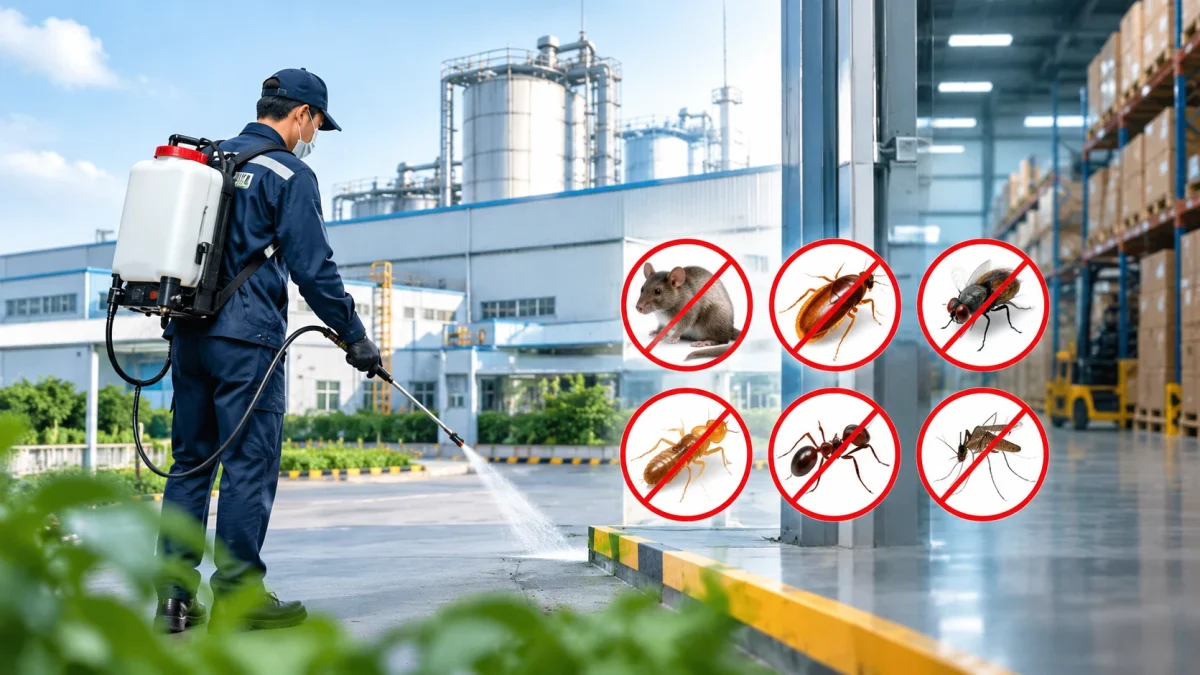
Best industrial pest control services
Industrial facilities face pest risks that are very different from those found in ordinary residential properties. Large production areas, warehouses, raw-material storage, machinery, loading zones, drainage systems, employee facilities, and outdoor compounds can all create opportunities for pests to enter, hide, feed, and reproduce.
Shurokkha Pest Control provides professional Industrial Pest Control Service in Bangladesh for factories, manufacturing plants, warehouses, food-processing facilities, pharmaceutical facilities, garment and textile factories, commercial storage facilities, and other industrial environments. Our approach focuses on identifying pest activity, understanding site-specific risks, applying appropriate treatment methods, and reducing the conditions that allow infestations to return.
A professional industrial pest management program is not simply about removing visible pests. It involves inspection, risk assessment, targeted treatment, monitoring, documentation, and preventive recommendations. Shurokkha’s inspection-based approach is designed to help businesses maintain cleaner and safer working environments while minimizing disruption to normal operations.
Whether you need factory pest control, warehouse pest management, rodent control, cockroach treatment, termite protection, or an ongoing industrial pest management program, our technicians can assess your facility and recommend a suitable service plan.
What Is Industrial Pest Control?
Industrial Pest Control is a structured pest management service designed specifically for large-scale commercial and industrial properties. Unlike basic one-time pest treatment, industrial pest management considers the entire facility, including production areas, storage spaces, loading docks, utility rooms, drainage points, employee areas, exterior boundaries, and potential pest entry routes.
The process generally begins with a detailed site inspection. Technicians look for visible pests, droppings, nesting activity, damage, breeding areas, moisture sources, food availability, structural gaps, and other conditions that may support infestation.
The next step is pest identification and risk assessment. Different pests require different management strategies. For example, rodents may require entry-point assessment and monitoring, while flies may require attention to waste, drains, food residues, and breeding sources.
After assessing the facility, a customized treatment plan can be developed. Depending on the pest and property, treatment may involve targeted applications, trapping, monitoring devices, baiting systems, preventive measures, or other appropriate pest management techniques.
Industrial pest control should also include follow-up and monitoring. This allows pest activity to be reviewed over time rather than treating the problem as a single isolated incident. Shurokkha’s commercial pest management approach similarly emphasizes inspection, identification, targeted treatment, prevention, monitoring, and follow-up.
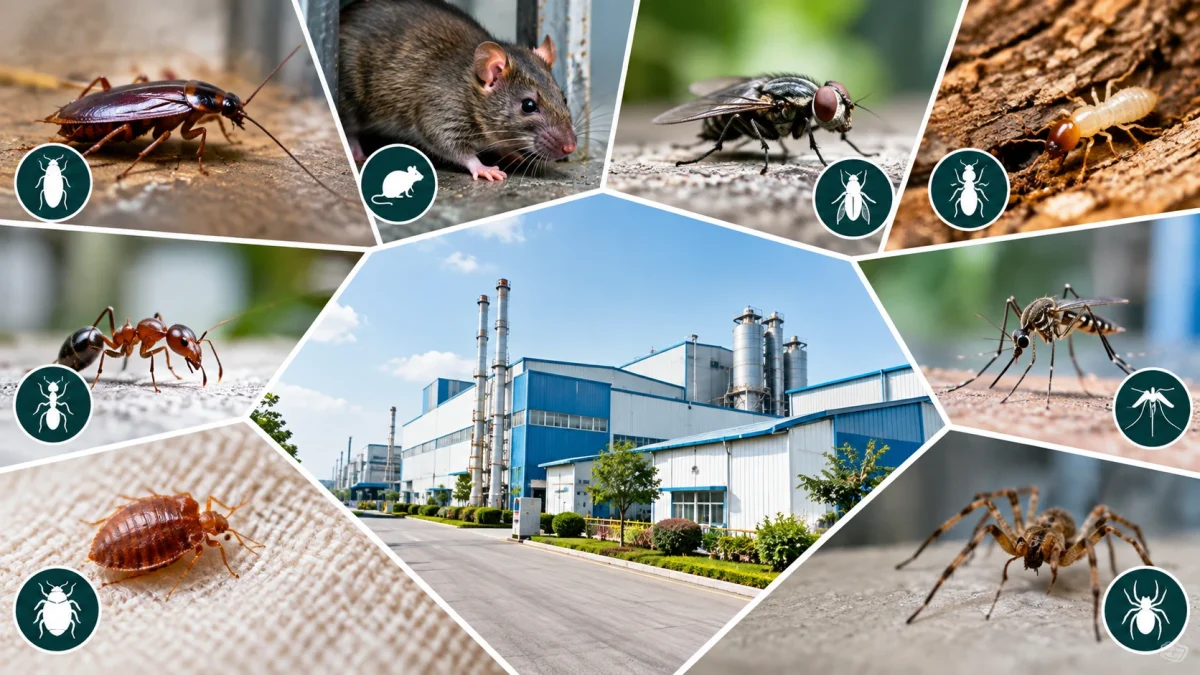
Our Industrial Pest Control Services
Cockroach Control
Cockroaches can become a significant hygiene concern in factories, warehouses, kitchens, food-processing areas, employee facilities, and storage rooms. They can hide in cracks, drains, equipment spaces, wall voids, and other concealed areas.
Our Cockroach Control service focuses on identifying activity zones and conditions that support infestation. Treatment recommendations are developed according to the facility, infestation level, and operational requirements. Regular monitoring can also help identify recurring activity before it becomes widespread.
Rodent Control
Rats and mice can damage electrical wiring, packaging, stored goods, documents, insulation, and other materials. In industrial facilities, they can also create serious sanitation and operational concerns.
Our Rodent Control service begins with an inspection to identify activity, nesting locations, food sources, movement routes, and possible entry points. Depending on the situation, professional trapping, monitoring, baiting systems, and exclusion recommendations may form part of the management plan.
Fly Control
Flies can be particularly problematic in food-related industries, warehouses, commercial kitchens, waste-handling areas, and manufacturing facilities. Persistent fly activity may indicate an underlying breeding source such as organic waste, drains, food residue, or moisture.
Our Fly Control service approach combines inspection, identification of breeding locations, targeted treatment, and recommendations for reducing attractants. This is particularly important for facilities where hygiene and product protection are operational priorities.
Termite Control
Termites can damage wooden structures, furniture, fixtures, storage materials, doors, partitions, and other vulnerable components of industrial properties. Because termite activity can remain hidden, early inspection is important.
Our Termite Control service is designed around identifying signs of activity, assessing affected areas, and recommending an appropriate treatment strategy for the property. Preventive termite inspections can also be considered where structural or environmental conditions create higher risk.
Ant Control
Ants can enter industrial properties through small gaps, doors, windows, utility routes, cracks, and other access points. Food storage, moisture, waste, and landscaping can further increase activity.
Our Ant Control service focuses on identifying activity areas and potential sources before treatment. For factories and warehouses, special attention may be given to storage zones, loading areas, packaging sections, utility rooms, and building perimeters.
Mosquito Control
Large industrial properties may have outdoor compounds, drainage systems, water-holding containers, landscaping, rooftops, or other areas where mosquitoes can breed.
Our Mosquito Control service combines inspection of breeding locations with appropriate treatment and prevention recommendations. Where required, professional fogging and targeted treatment may be considered as part of a broader mosquito management program.
Bed Bug Control
Although bed bugs are more commonly associated with residential and hospitality environments, industrial facilities may experience problems in worker rest areas, changing rooms, dormitories, transport-related accommodation, or shared facilities.
Our bed bug service management approach focuses on confirming activity, identifying affected areas, treating appropriate hiding locations, and providing preparation and prevention guidance.
Spider & Lizard Control
Spider and lizard services may become common around warehouses, factories, storage rooms, windows, exterior walls, lighting areas, and spaces where insects are abundant.
Effective management starts with identifying why these pests are present. Reducing insect activity, improving entry-point control, addressing suitable hiding areas, and applying appropriate treatment can help reduce recurring activity. Shurokkha also provides spider and lizard management for commercial environments.
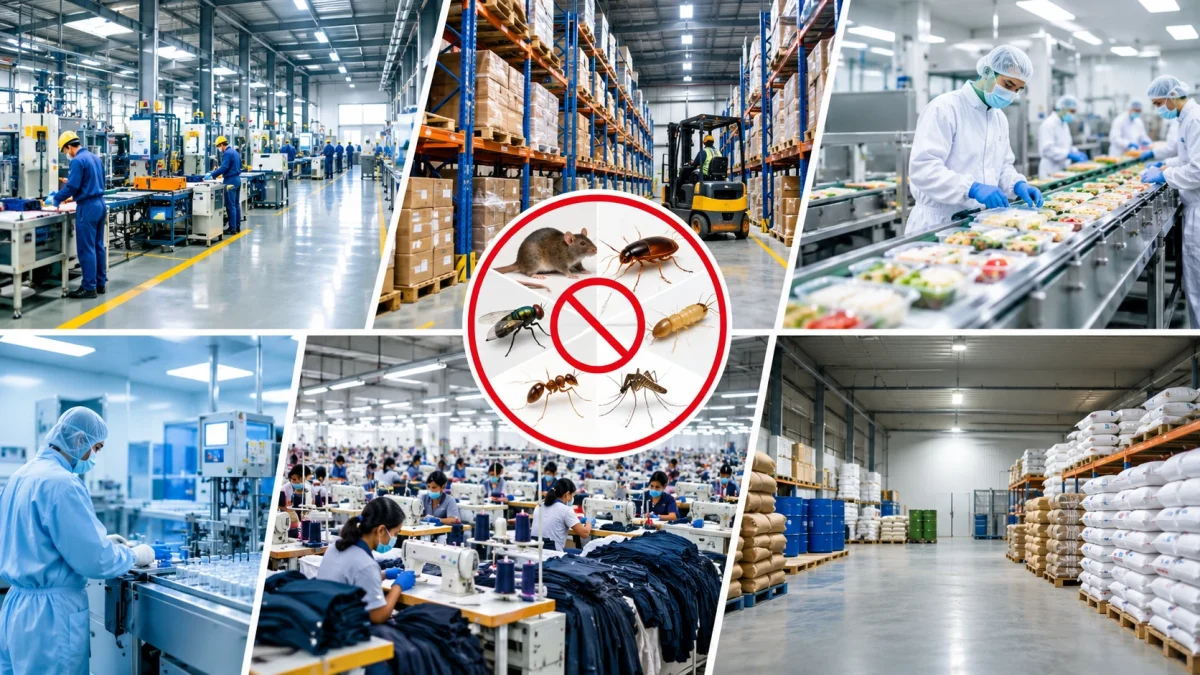
Industrial Properties We Serve
Manufacturing Plants
Manufacturing facilities can contain production floors, machinery, raw materials, storage areas, loading zones, offices, and employee facilities. Each area may have different pest risks. Our site-specific approach helps identify these risks and develop appropriate pest management recommendations.
Factories
Factories may experience rodents, cockroaches, flies, ants, termites, mosquitoes, and other pests depending on the industry and surrounding environment. Our Factory Pest Control Service can be planned around production schedules and facility requirements to minimize unnecessary disruption.
Warehouses & Distribution Centers
Warehouses provide pests with shelter, packaging materials, stored products, and multiple access points. Rodents, cockroaches, ants, flies, spiders, and stored-product pests can become recurring problems without regular inspection and monitoring.
Our Warehouse Pest Control Service focuses on storage areas, loading docks, perimeter zones, utility areas, waste points, and potential pest entry routes.
Food Processing Facilities
Food-processing facilities require particularly careful pest management because food ingredients, production processes, waste, moisture, and packaging can attract pests.
A preventive program may combine inspection, monitoring, sanitation recommendations, treatment, documentation, and follow-up. The objective is to control pest activity while supporting the facility’s hygiene and operational requirements.
Pharmaceutical Facilities
Pharmaceutical facilities require a controlled and carefully documented approach to pest management. Pest activity can affect hygiene, storage conditions, workplace standards, and operational confidence.
Treatment should therefore be planned according to the facility’s specific requirements, with appropriate communication, scheduling, monitoring, and documentation.
Garment & Textile Factories
Garment and textile factories may have large production floors, fabric storage, cartons, employee facilities, warehouses, and loading areas. Rodents, cockroaches, ants, mosquitoes, and other pests can affect workplace cleanliness and stored materials.
A regular pest management program can help identify risks before they develop into larger infestations.
Commercial Storage Facilities
Storage facilities can remain relatively undisturbed for long periods, creating favorable conditions for pests to hide and reproduce. Regular inspection, monitoring, sanitation recommendations, and entry-point control can help reduce pest risk.
Common Pest Risks in Industrial Facilities
Industrial properties can experience different pests depending on their location, industry, building design, sanitation practices, storage systems, and surrounding environment.
Rodents can enter through small gaps and may damage wiring, packaging, stored materials, and infrastructure.
Cockroaches are commonly associated with food, moisture, drains, equipment areas, and concealed spaces.
Flies may indicate waste, food residue, drainage, moisture, or other breeding sources.
Termites can cause damage to wooden structures and materials, sometimes without immediately visible signs.
Ants may enter through structural gaps and become attracted to food, moisture, or suitable nesting conditions.
Mosquitoes can increase around standing water, drains, landscaping, rooftops, and other breeding locations.
Stored-product pests can affect warehouses and facilities that store grains, food ingredients, packaged products, or other susceptible materials. Early identification and monitoring are important because pest activity can spread through storage areas.
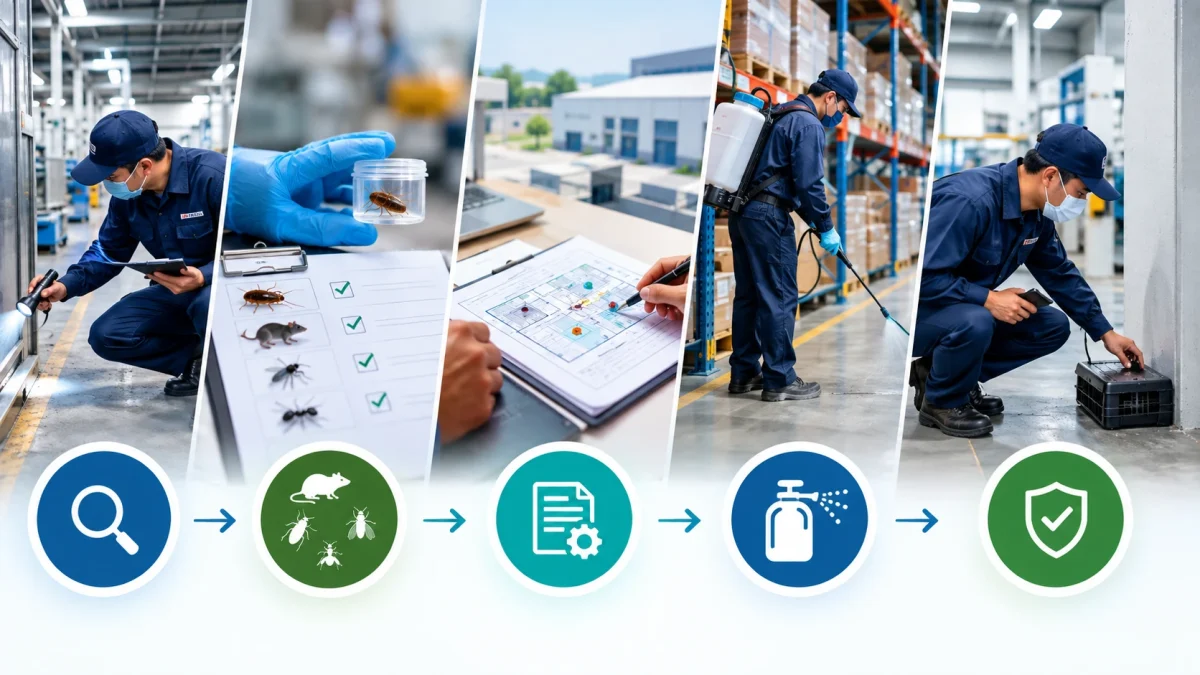
Our Industrial Pest Control Process
Detailed Site Inspection
Every effective industrial pest management program should start with understanding the facility. Our technicians inspect relevant interior and exterior areas to identify pest activity, potential entry points, moisture sources, food sources, nesting locations, and other risk factors.
Pest Identification & Risk Assessment
Correct pest identification helps determine the appropriate management strategy. We assess the pest type, infestation level, affected areas, environmental conditions, and operational considerations before recommending treatment.
Customized Treatment Plan
There is no single treatment plan suitable for every industrial property. A factory, warehouse, food-processing facility, and pharmaceutical facility can have very different requirements.
Our recommendations are therefore based on the property, pest type, infestation severity, access conditions, operational schedule, and prevention requirements.
Professional Treatment
Treatment is carried out using appropriate professional methods based on the inspection findings. Depending on the pest problem, this may involve targeted applications, traps, baiting systems, monitoring devices, or other suitable approaches.
The objective is to address active pest activity while reducing unnecessary treatment and minimizing disruption to business operations.
Monitoring & Follow-Up
Industrial pest management should not end immediately after treatment. Follow-up inspections and monitoring can help determine whether pest activity is decreasing and whether additional preventive action is necessary.
For recurring or higher-risk facilities, an ongoing monitoring program can provide greater visibility into pest activity over time.
Preventive Industrial Pest Management
Preventive Industrial Pest Management helps businesses address pest risks before they develop into major infestations. Rather than waiting until employees notice pests or products are affected, facilities can use scheduled inspections and monitoring to identify early warning signs.
A preventive program may include:
- Regular inspections to identify emerging pest activity.
- Pest monitoring in higher-risk areas.
- Entry-point control around doors, vents, drains, pipes, cracks, and other access routes.
- Sanitation recommendations to reduce food, waste, moisture, and shelter opportunities.
- Scheduled treatment based on the facility’s pest risk and operational requirements.
- Documentation and reporting to maintain a clear record of inspections, findings, treatments, and recommendations.
This preventive approach is particularly useful for factories, warehouses, food businesses, pharmaceutical facilities, and other properties where pest activity can affect operations, inventory, hygiene, or business reputation.

Why Choose Shurokkha for Industrial Pest Control?
Selecting an Industrial Pest Control Company requires more than comparing treatment prices. Industrial properties need a service provider that understands operational requirements and can develop a practical management approach.
Experienced Technicians
Shurokkha’s team has experience providing pest management for homes, offices, factories, warehouses, hospitals, restaurants, and other commercial environments.
Site-Specific Pest Management
Every industrial property has different structural, environmental, and operational conditions. We focus on inspection-based recommendations rather than treating every facility identically.
Professional Equipment
Our pest management services use professional equipment and treatment methods appropriate to the identified pest problem and property requirements.
Flexible Scheduling
Industrial treatment can be coordinated around production, storage, loading, and other operational requirements where possible. This helps businesses manage pest problems without unnecessary disruption.
Preventive Approach
Our objective is not only to address visible pests. Inspection, sanitation recommendations, entry-point assessment, monitoring, and follow-up can help reduce the likelihood of recurring infestations.
Ongoing Monitoring and Support
For facilities with continuing pest risks, ongoing monitoring and scheduled service can provide additional protection. Shurokkha also offers support for commercial and industrial properties across Bangladesh.
Industrial Pest Control Service Areas
Shurokkha Pest Control provides pest management services across Dhaka and several major industrial and commercial areas of Bangladesh.
Dhaka
Industrial and commercial pest management is available throughout Dhaka, including areas such as Tejgaon, Mirpur, Uttara, Tongi, Demra, and surrounding locations.
Gazipur
Gazipur is an important industrial area, particularly for manufacturing, garment, textile, warehouse, and commercial operations. Shurokkha lists Gazipur among its service locations.
Narayanganj
Narayanganj is also included among Shurokkha’s service areas, supporting commercial and industrial pest management requirements.
Savar
Savar and nearby industrial areas are included within Shurokkha’s Dhaka-area service coverage.
Ashulia
Ashulia is also listed within the company’s Dhaka-area coverage, making it a relevant service location for factories and industrial properties in the area.
Tongi
Tongi is specifically included in Shurokkha’s published service coverage.
Other Service Areas
Shurokkha also states that it serves multiple locations across Bangladesh, including Chattogram, Khulna, Rajshahi, Barishal, Rangpur, Mymensingh, Cumilla, Cox’s Bazar, and other areas. For an industrial property outside the listed locations, businesses should contact the team to confirm current service availability.
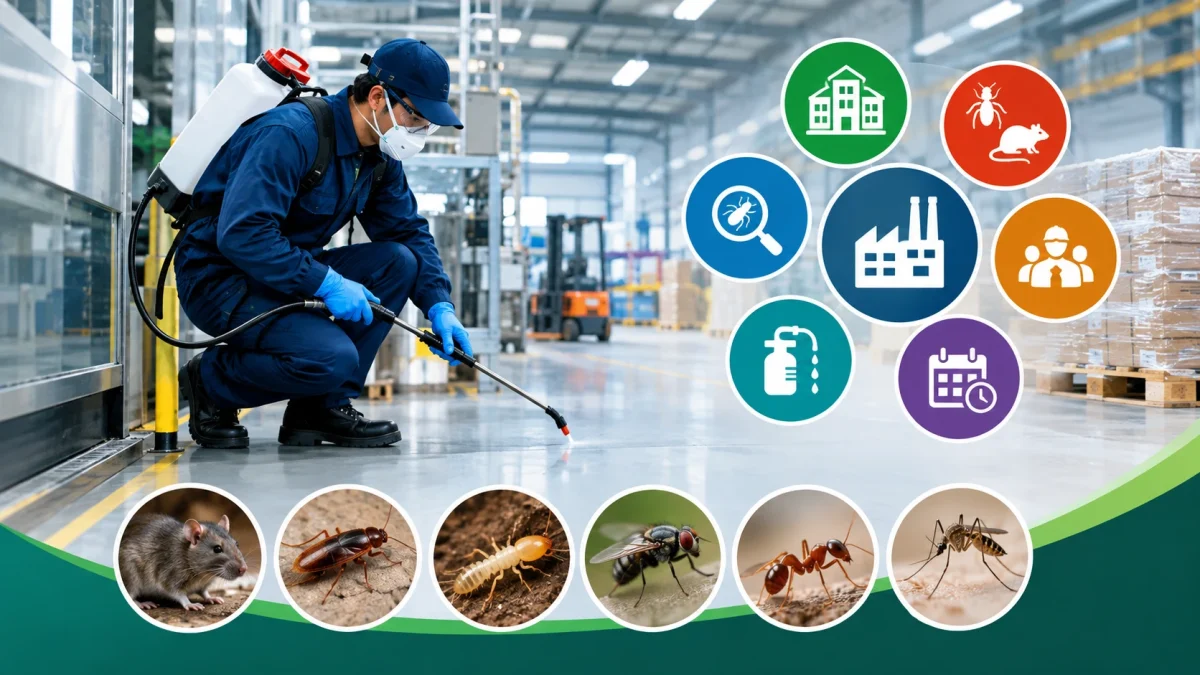
Industrial Pest Control Cost in Bangladesh
The cost of Industrial Pest Control Service in Bangladesh varies because industrial properties differ significantly in size, layout, pest risks, operational requirements, and infestation severity.
The main factors that can influence pricing include:
- Facility size: Larger factories, warehouses, and industrial compounds generally require more inspection, equipment, labor, and treatment coverage.
- Pest type: Rodent, cockroach, termite, fly, mosquito, ant, and stored-product pest management may require different methods and levels of monitoring.
- Infestation level: A localized issue may require less work than a widespread infestation affecting several departments or buildings.
- Industry: Food processing, pharmaceutical, garment, manufacturing, and general storage facilities can have different treatment and documentation requirements.
- Treatment requirements: The required treatment method, equipment, number of service visits, and monitoring requirements can affect the quotation.
- Service frequency: One-time treatment, periodic maintenance, and ongoing industrial pest management programs have different pricing structures.
For this reason, a fixed price cannot accurately represent every industrial facility. Shurokkha recommends discussing the property type, size, location, pest problem, and service requirements before receiving a suitable quotation. The company also publishes general commercial pricing information for selected services, while larger or specialized requirements may need individual assessment.
Protect Your Industrial Facility with Professional Pest Control
Pest activity can affect workplace hygiene, stored materials, equipment, inventory, employee comfort, business operations, and customer confidence. Waiting until a pest infestation becomes widespread can make the problem more difficult to manage.
Shurokkha Pest Control provides Industrial Pest Control Service in Bangladesh for factories, manufacturing plants, warehouses, food-processing facilities, pharmaceutical facilities, garment and textile factories, and other industrial properties. Our inspection-based approach helps identify pest risks, develop a customized treatment plan, and introduce preventive measures designed around your facility.
Whether you need Factory Pest Control in Dhaka, Warehouse Pest Control in Dhaka, rodent management, cockroach control, termite treatment, fly control, mosquito management, or a broader industrial pest management program, our team can assess your requirements and recommend a suitable solution. Shurokkha serves Dhaka, Gazipur, Narayanganj, Savar, Ashulia, Tongi, and other locations across Bangladesh, subject to service availability.
FAQ About Industrial Pest Control Service
Professional pest control should be planned around the safety requirements of the facility and people present. Before treatment, the service provider should explain relevant preparation and safety precautions. Shurokkha states that its pest management services use safe, professional methods and provide guidance before treatment.
Factory Pest Control Service generally begins with a detailed inspection followed by pest identification, risk assessment, customized treatment, and monitoring. Production areas, storage rooms, loading zones, employee facilities, utility areas, and external perimeters may be considered depending on the pest problem.
Yes. Warehouse environments can be vulnerable to rodents, cockroaches, ants, flies, spiders, termites, and stored-product pests. A warehouse pest management plan can focus on storage zones, loading docks, entry points, waste areas, and other high-risk locations.
Professional rodent management begins by identifying activity, nesting locations, food sources, movement routes, and entry points. Depending on the inspection findings, trapping, monitoring, baiting systems, exclusion recommendations, and follow-up inspections may be used.
There is no universal schedule. Frequency depends on the industry, facility conditions, pest history, environmental risks, infestation level, and monitoring results. Higher-risk facilities may benefit from more frequent inspections and ongoing pest management.
Regular monitoring is particularly useful for facilities where pest activity could affect hygiene, products, inventory, equipment, or operations. Monitoring can help identify pest activity earlier and support preventive decision-making.
Pricing depends on facility size, pest type, infestation severity, industry, treatment requirements, number of visits, and service frequency. A site assessment is the best way to determine the appropriate service and quotation.
Preparation depends on the pest and treatment method. Businesses may need to organize affected areas, protect or relocate sensitive materials where appropriate, provide technicians with access to relevant spaces, and follow the preparation instructions provided before treatment.
In many cases, treatment can be coordinated around operational schedules to reduce disruption. The appropriate timing depends on the facility, pest problem, treatment method, and areas requiring access.
Yes. Shurokkha provides commercial and industrial pest management solutions that can include inspection, targeted treatment, prevention recommendations, monitoring, and follow-up support.